How Do You Measure Durability?
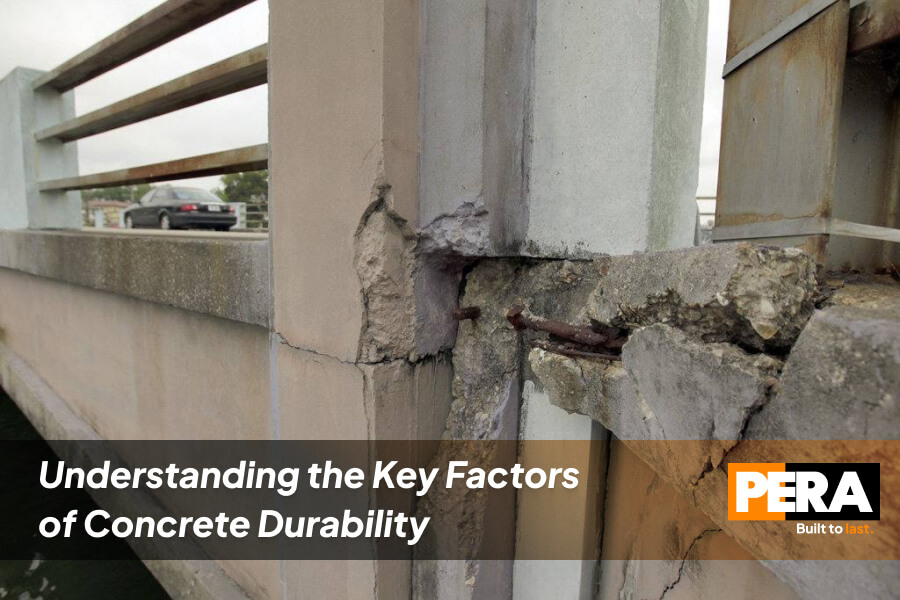
Many people in the concrete industry assume that compressive strength is the key indicator of durability. This is a common misconception. The strength of concrete has very little to do with its durability.
What is the Best Way to Evaluate Durability?
To evaluate durability, we must first understand the primary cause of concrete degradation.
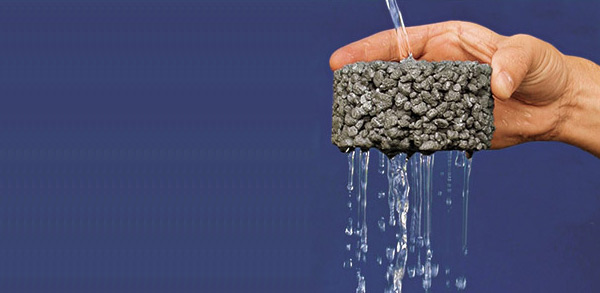
The durability of concrete is critical for maintaining its serviceability. It largely depends on the permeability of the concrete’s microstructure, which determines the ability of fluids to penetrate the material. High permeability allows harmful molecules to enter and compromise the chemical stability of the concrete. Conversely, low permeability enhances resistance to water, sulfate ions, chloride ions, alkali ions, and other destructive substances.
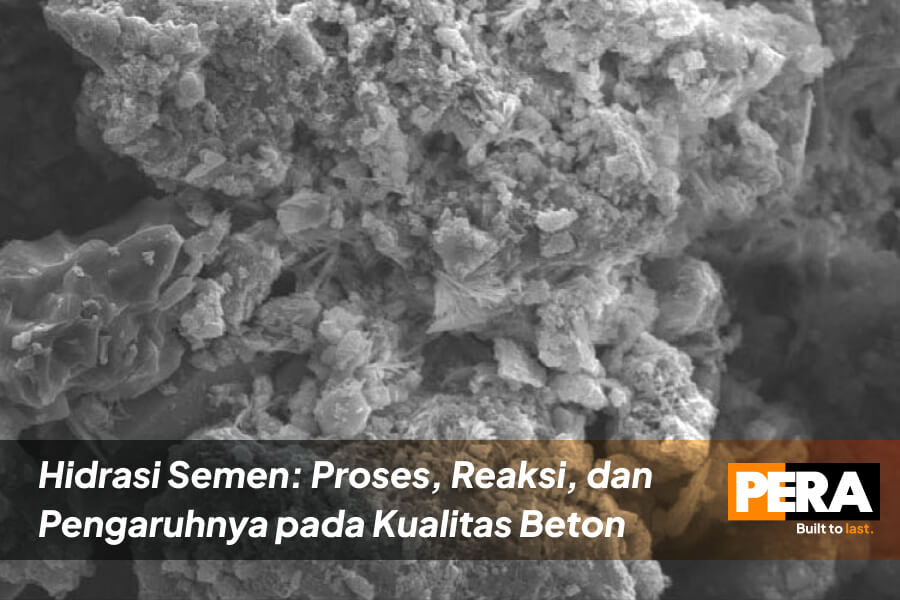
Concrete permeability is closely related to the characteristics of its pore structure in the cement paste and the presence of microcracks at the aggregate-cement paste interface. The pore structure includes the volume and size of interconnected capillary pores. The hydration reaction of cement produces a mixture of solid and pore systems. This pore network allows fluid transport into the concrete, influenced by factors such as the properties and composition of the concrete materials and the water-OPC reaction. During hydration, CO2 gas bubbles form and eventually rise through the concrete, creating macro pores and capillaries.
Initial curing conditions, curing duration, age at testing, and climatic exposure also affect pore structure. Proper curing temperature and duration are crucial, especially when using mineral admixtures like fly ash as partial cement substitutes. These admixtures often require longer curing periods to achieve the desired pozzolanic effect on concrete performance.
Sorptivity, an index of moisture transport into unsaturated specimens, is increasingly recognized as an important measure of concrete durability. It assesses the capillary suction driving water ingress into concrete, rather than a pressure head. This process is analogous to siphoning water from a barrel with a hose. Detailed pore structure analysis can be conducted using advanced techniques, though they are often impractical for everyday use. Sorptivity testing is more representative of field conditions and can measure the total pore volume of capillary and gel pores in concrete.
Martys and Ferraris [1] have demonstrated that the sorptivity coefficient is essential for predicting the service life and performance of concrete structures. Water absorption by immersion is also a relevant parameter. Experimental investigations show that curing conditions significantly impact capillary permeability. Adequate curing is essential for concrete to achieve its potential performance.
[1] 33. Martys NS, Ferraris CF. 1997. Capillary transport in mortars and concrete. Cem. Concr. Res. 27, 747–760. (10.1016/S0008-8846(97)00052-5) [CrossRef] [Google Scholar]
Enhance Concrete Durability with PERAMIX SC-50
Understanding the factors that affect concrete durability is crucial for ensuring long-lasting and high-performance structures. To simplify achieving these qualities, consider using PERAMIX SC-50, an advanced liquid admixture that enhances the properties of your concrete mixes.
PERAMIX SC-50 offers numerous benefits that address the key factors influencing concrete durability:
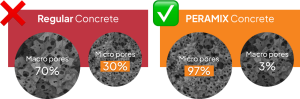
- Innovative Gas Release: Unlike regular concrete, PERAMIX SC-50 releases acetylene gas instead of CO2, forming small bubbles that evaporate quickly. This results in fewer bug holes and gaps, creating a denser and more uniform pore matrix with 97% micro pores compared to regular concrete’s 70% macro pores.
- Complete Hydration: Achieves complete hydration of the cement grain through chemical decay agitation within the first 20 minutes of batching, reducing the cement grain diameter significantly from 90μ to 15μ in just 4 to 6 hours. This rapid hydration results in a creamy, dense paste with no bleeding or water release.
- Self-Curing and Improved Compaction: Ensures even curing throughout the concrete slab’s depth, enhancing the concrete’s overall compaction and uniformity. The resulting concrete is darker, stiffer, and maintains improved workability at a lower slump.
- Liquid Impermeability: Increases the density of the concrete by extending the gel bodies within the existing pore structure, restricting moisture passage while allowing the concrete to breathe. This creates a hydraulic lock, preventing destructive osmotic pressure build-up, crucial for below-grade structures.
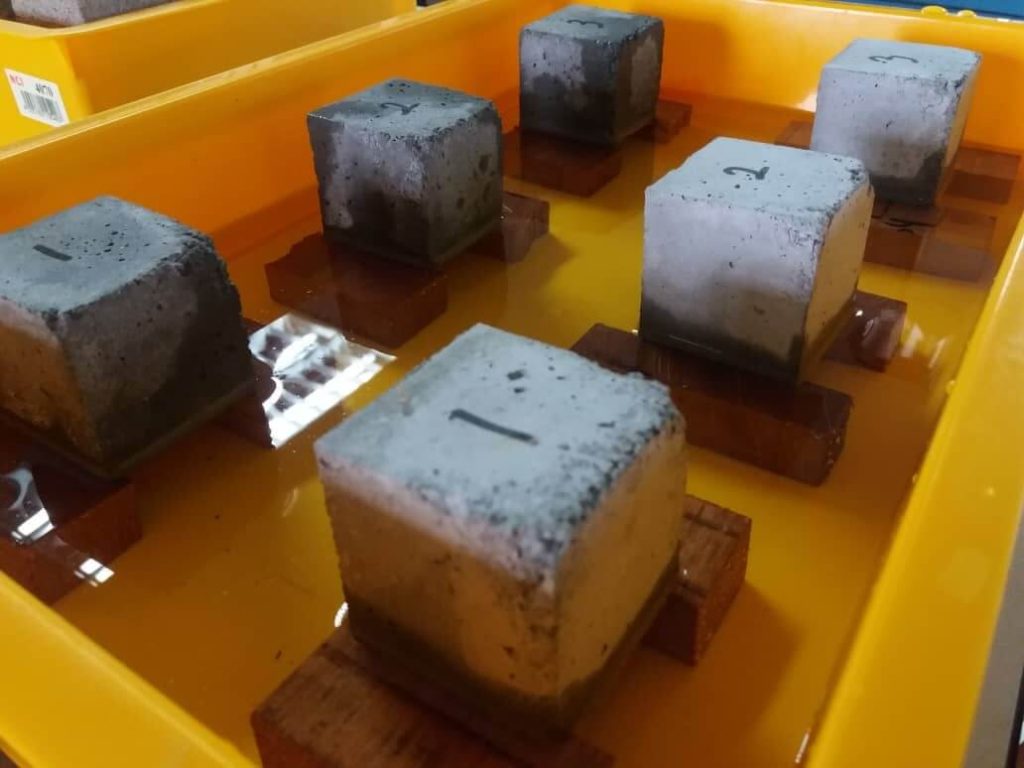
- Enhanced Concrete Matrix: Breaks down cement grains to achieve a rock-like uniformity and complete liquid impermeability within 4 to 6 hours. This homogeneously distributed porous system prevents enforced liquid migration, mimicking the natural rock impermeability phenomenon.
- Exceeding International and Indonesian Construction Standards: PERAMIX SC-50 exceeds the stringent standards set forth by DIN 1045, which mandates a maximum of 5 cm. It aligns with Indonesia’s construction standards as well, demonstrating its exceptional quality and compliance with international benchmarks.
By incorporating PERAMIX SC-50 into your concrete mixes, you can achieve superior durability without the usual complexities and costs. For more information, visit our product pages.